

What Does “Take With Food” Really Mean?
When you read the instructions on a medicine label, you may come across phrases such as “take with food,” “take after food,” or “take on an empty stomach.” These instructions may seem simple, but they can be important for how a medicine works and how your body tolerates it.
Understanding what these instructions mean can help you take your medication correctly and avoid common mistakes.
What Does “Take With Food” Mean?
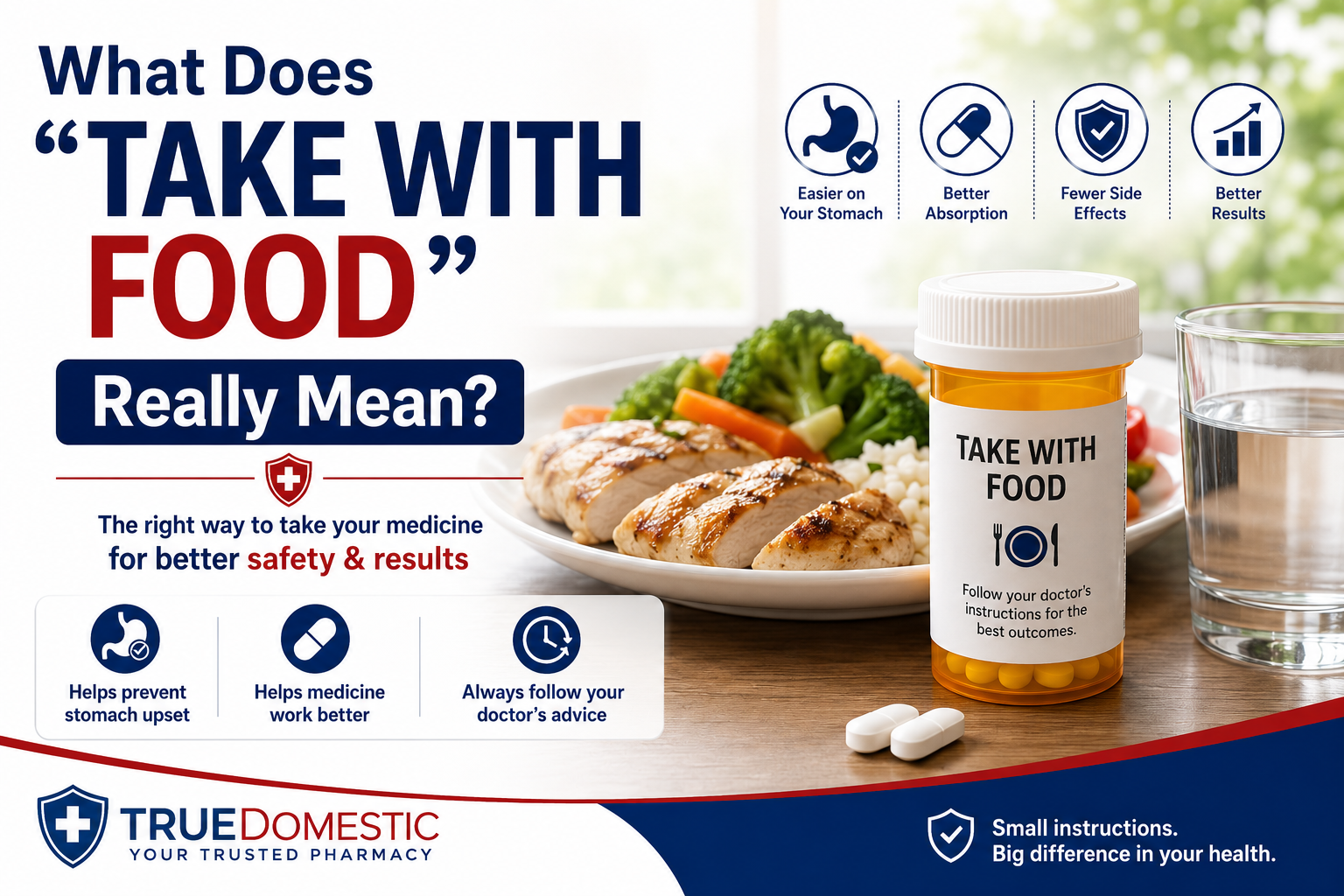
When a medicine says “take with food,” it generally means you should take the medicine during a meal or shortly after eating.
The purpose can vary depending on the medicine. Food may help reduce stomach irritation, change how the medicine is absorbed, or affect how the medicine works in the body.
Always follow the specific instructions provided with your medicine because the timing can differ between medications.
Why Do Some Medicines Need to Be Taken With Food?
There are several reasons a healthcare professional or medicine label may recommend taking a medicine with food.
1. To Reduce Stomach Irritation
Some medicines can irritate the stomach when taken without food. Taking them with a meal may help reduce symptoms such as stomach discomfort or nausea.
However, this does not apply to every medicine, so you should not automatically take all medicines with food.
2. To Improve Absorption
Food can affect how quickly or how much of a medicine is absorbed into the bloodstream.
For some medicines, taking them with food may help the body absorb the medicine properly. For others, food may reduce or delay absorption.
This is why following the medicine’s specific instructions is important.
3. To Help Establish a Routine
Taking a medicine with a regular meal can sometimes make it easier to remember your dose.
For example, if your healthcare professional has instructed you to take a particular medicine with breakfast, connecting the dose with your normal routine may help you remember it.
Does “With Food” Mean You Need a Full Meal?
Not necessarily.
The amount and type of food required can depend on the specific medicine. For some medicines, a normal meal may be appropriate, while others may have more specific instructions.
Do not assume that a small snack is always enough. If the instructions are unclear, ask your pharmacist or doctor what is appropriate for your medicine.
What Does “Take After Food” Mean?
“Take after food” generally means taking the medicine after you have eaten.
The exact timing can vary depending on the medicine, so it is important to follow the instructions provided on the label or by your healthcare professional.
If you are unsure how soon after eating you should take your medicine, ask a pharmacist for clarification.
What Does “Take on an Empty Stomach” Mean?
“Take on an empty stomach” means the medicine should generally be taken when there is little food in the stomach.
Some medicines are absorbed better when taken without food. Eating at the same time may change how much of the medicine enters the bloodstream or how quickly it is absorbed.
Because fasting requirements can vary, follow the specific instructions for your medicine rather than applying a general rule.
Can You Take Every Medicine With Food?
No.
Some medicines should be taken with food, while others should be taken before or after meals, and some are best taken on an empty stomach.
Taking a medicine with food when it is supposed to be taken without food may affect how the medicine works.
If your medicine does not clearly explain when to take it, consult a doctor or pharmacist.
What About Drinks?
Water is generally the preferred drink for taking most medicines unless your healthcare professional or medicine instructions say otherwise.
Some beverages can affect certain medicines. Alcohol can also interact with some medications and may increase certain risks.
Do not assume that juice, milk, coffee, tea, or other beverages are interchangeable with water when taking medication.
If your medicine has specific beverage restrictions, follow those instructions carefully.
What If You Forget to Take Your Medicine With Food?
What you should do depends on the specific medicine.
Do not automatically take an additional dose to compensate. Check the medication instructions or contact a pharmacist or healthcare professional for advice.
If you frequently forget your medication instructions, ask your pharmacist about practical ways to fit your medicine into your daily routine.
Common Mistakes to Avoid
When taking medicines that have food-related instructions, avoid:
- Assuming every medicine should be taken with food
- Taking a medicine with food when the label says to take it on an empty stomach
- Assuming a small snack is always sufficient
- Taking medicine with alcohol without checking whether it is safe
- Ignoring specific instructions about meals or beverages
- Changing the timing of your medication without professional advice
How to Make Medication Instructions Easier to Follow
A few simple habits can help:
- Read the medicine label carefully.
- Follow your healthcare professional’s instructions.
- Take the medicine at the recommended time.
- Use water unless different instructions are provided.
- Ask your pharmacist if the wording is unclear.
- Keep a consistent medication routine when appropriate.
Final Thoughts
“Take with food” is more than a casual suggestion. For some medicines, the presence or absence of food can affect how the medicine is absorbed, how well it works, or how comfortable it is for your stomach.
Always follow the instructions specific to your medication. If you are unsure whether you should take a medicine before, during, or after a meal, speak with a qualified doctor or pharmacist rather than guessing.
Medical Disclaimer: This article is intended for general educational purposes only and does not replace professional medical advice, diagnosis, or treatment. Food-related medication instructions vary between medicines. Always follow the directions provided with your medication and consult a qualified healthcare professional if you have questions.