

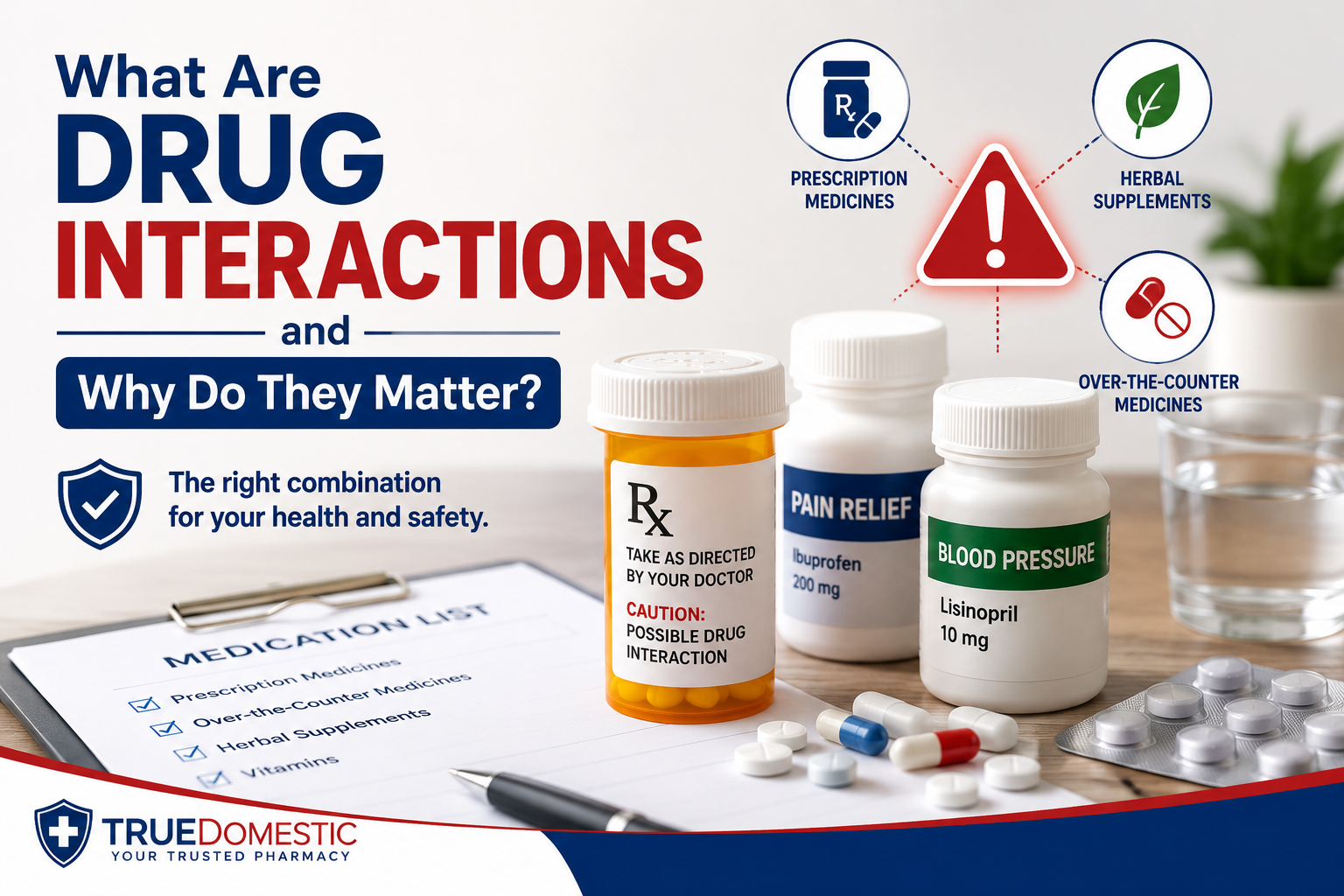
What Are Drug Interactions and Why Do They Matter?
Taking more than one medicine is common, especially for people managing different health conditions. However, medicines do not always work independently. One medicine can sometimes change how another medicine works, or a medicine can interact with food, alcohol, supplements, or certain health conditions.
These situations are known as drug interactions. Understanding them is an important part of using medicines safely.
What Is a Drug Interaction?
A drug interaction happens when one substance affects the way another medicine works.
An interaction can potentially:
- Increase or decrease the effect of a medicine
- Increase the risk of side effects
- Change how quickly a medicine is absorbed or removed from the body
- Make a medicine less effective
- Create unexpected health risks
Not every interaction causes noticeable symptoms, which is why discussing your medicines with a doctor or pharmacist is important.
Different Types of Drug Interactions
Drug interactions generally fall into several categories.
1. Medicine-to-Medicine Interactions
This occurs when two or more medicines affect each other.
For example, one medicine may increase the effects or side effects of another medicine. In other cases, one medicine may reduce how effectively another medicine works.
This is why healthcare professionals should know about all prescription and OTC medicines you are taking.
2. Medicine-to-Food Interactions
Certain medicines can interact with particular foods or beverages.
Food may sometimes affect how a medicine is absorbed or processed by the body. Some medicines may also have specific instructions regarding whether they should be taken with or without food.
Always follow the instructions provided with your medicine.
3. Medicine-to-Alcohol Interactions
Alcohol can interact with certain medicines and may increase effects such as drowsiness, dizziness, or impaired coordination.
For some medicines, combining them with alcohol may increase the risk of serious complications.
If you are unsure whether alcohol is safe while taking a particular medicine, ask your doctor or pharmacist.
4. Medicine-to-Supplement Interactions
Vitamins, herbal products, and dietary supplements can also interact with medicines.
Natural products are not automatically free from risks. Some supplements may affect how prescription or OTC medicines work.
Always tell your healthcare professional about supplements you regularly use.
5. Medicine-to-Condition Interactions
Certain medicines may not be suitable for people with particular medical conditions.
For example, a medicine may affect blood pressure, heart rate, blood sugar, or other body functions in ways that could be important for someone with an existing condition.
This is one reason your medical history is important when a healthcare professional recommends a medicine.
Why Do Drug Interactions Matter?
Drug interactions can range from minor to potentially serious.
An interaction may cause unwanted effects or make treatment less effective. In some situations, the combination of certain substances may create significant health risks.
The risk can depend on factors such as:
- The medicines involved
- Dosage
- Age
- Medical conditions
- How long the medicines are taken
- Other medicines or supplements being used
Common Signs to Watch For
Some possible signs of a medication-related problem can include:
- Unusual dizziness
- Excessive sleepiness
- Nausea or vomiting
- Headache
- Changes in blood pressure
- Confusion
- Unusual bleeding
- Skin reactions
These symptoms can have many possible causes and do not necessarily mean a drug interaction has occurred.
If you experience a severe or unexpected reaction after taking medication, seek appropriate medical attention.
Who Is at Greater Risk of Drug Interactions?
Anyone taking medicines can potentially experience an interaction, but the risk may be higher for people who:
- Take several medicines at the same time
- Have multiple health conditions
- Are older adults
- Regularly use supplements or herbal products
- Frequently change medications
- Have difficulty following medication instructions
Keeping an updated list of all medicines and supplements can help healthcare professionals identify potential problems.
How Can You Reduce the Risk of Drug Interactions?
There are several simple habits that can help.
Keep an Updated Medication List
Write down the name, strength, and dosage of every medicine you take. Include OTC medicines, vitamins, and supplements.
Tell Your Doctor and Pharmacist Everything You Take
Do not leave out supplements or medicines you only use occasionally. Even occasional products can be relevant when checking for interactions.
Read the Label
Medicine labels often contain important information about food, alcohol, other medicines, and activities that should be avoided.
Avoid Self-Medicating With Prescription Medicines
Never use someone else’s prescription medicine or change your prescribed dose without professional advice.
Ask Before Adding a New Medicine
Before starting a new OTC medicine, supplement, or herbal product, ask a doctor or pharmacist whether it is appropriate with your existing medicines.
What Should You Do If You Think You Have a Drug Interaction?
Do not automatically stop a prescription medicine unless a healthcare professional tells you to do so.
Contact your doctor or pharmacist and explain what medicines, supplements, and other substances you are taking. They can assess whether an interaction is possible and advise you on the appropriate next step.
If you experience severe symptoms or a potentially life-threatening reaction, seek urgent medical care.
Final Thoughts
Drug interactions are an important consideration whenever you take more than one medicine or combine medicines with supplements, alcohol, or certain foods.
The safest approach is to keep an accurate medication list, read medicine labels carefully, and communicate openly with your doctor or pharmacist.
A few minutes of checking can help reduce avoidable medication-related risks and support safer treatment.
Medical Disclaimer: This article is intended for general educational purposes only and does not replace professional medical advice, diagnosis, or treatment. Drug interactions depend on the specific medicines, doses, and individual circumstances. Always consult a qualified healthcare professional before starting, stopping, or changing medication.