


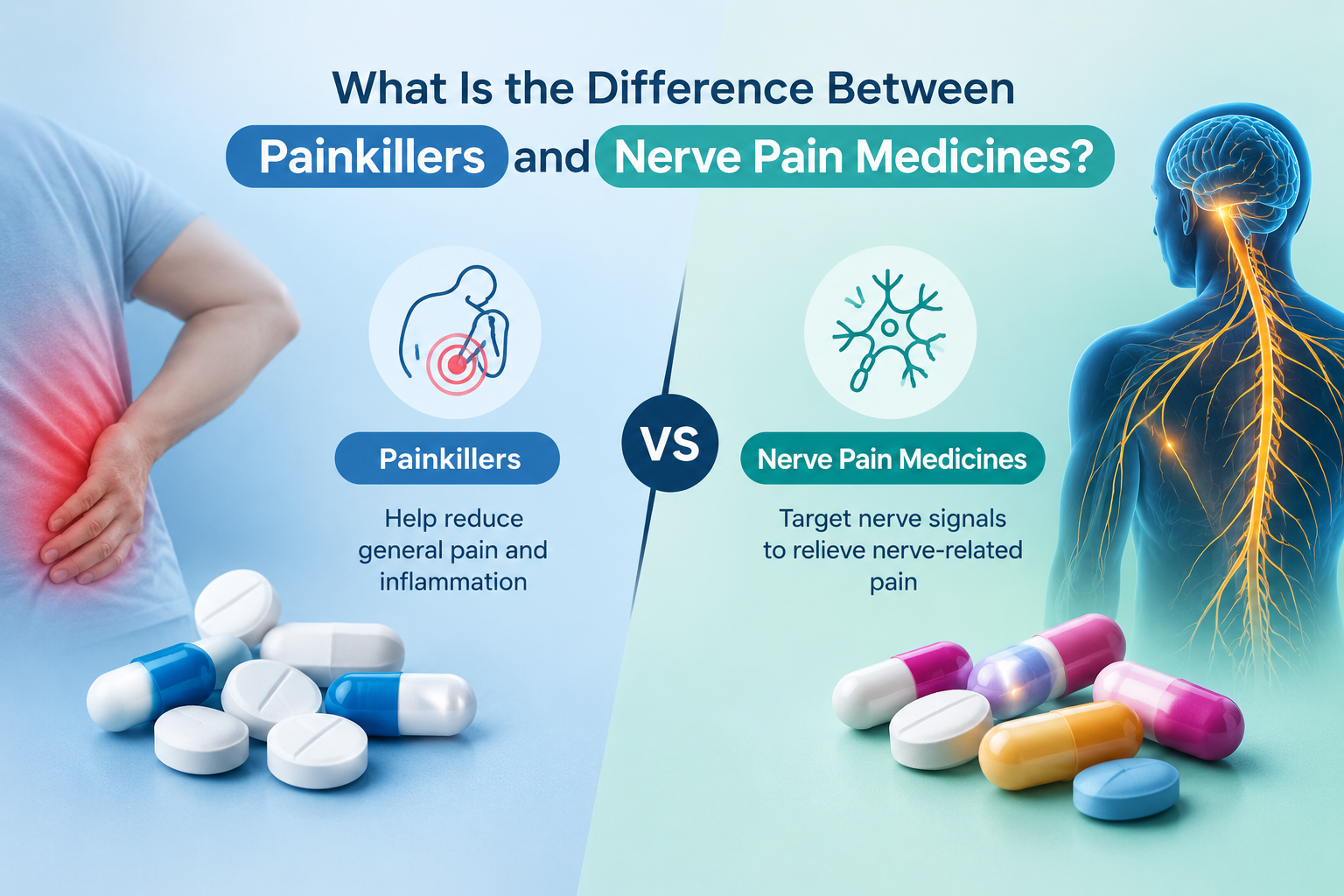
What Is the Difference Between Painkillers and Nerve Pain Medicines?
What Is the Difference Between Painkillers and Nerve Pain Medicines?
Pain is not always caused by the same underlying problem. A headache, muscle injury, arthritis, or toothache may involve inflammation or tissue damage, while conditions such as sciatica, diabetic neuropathy, or nerve compression can involve abnormal nerve signaling.
Because the causes of pain can differ, the medicines used to manage them can also be different. Painkillers and nerve pain medicines are not interchangeable, and the appropriate treatment depends on the type and cause of pain.
What Are Painkillers?
Painkillers, also called analgesics, are medicines used to reduce or relieve pain. Some commonly used pain-relieving medicines work by reducing substances involved in inflammation and pain signaling.
Examples include medicines such as:
- Paracetamol (acetaminophen)
- Ibuprofen
- Naproxen
- Other prescription or over-the-counter analgesics
Depending on the medicine, painkillers may be used for headaches, muscle aches, dental pain, menstrual cramps, injuries, arthritis, and other forms of acute or inflammatory pain.
However, different painkillers have different safety considerations. For example, some anti-inflammatory painkillers may affect the stomach, kidneys, blood pressure, or cardiovascular system, particularly when used frequently or at higher doses.
What Is Nerve Pain?
Nerve pain, also known as neuropathic pain, occurs when nerves are damaged, irritated, or functioning abnormally.
Instead of pain being caused primarily by inflammation or tissue injury, the nervous system itself can send abnormal pain signals.
Nerve pain may feel like:
- Burning
- Tingling or “pins and needles”
- Electric-shock-like sensations
- Shooting pain
- Numbness
- Increased sensitivity to touch
Conditions that may involve nerve pain include diabetic neuropathy, sciatica, certain types of nerve compression, shingles-related nerve pain, and some other neurological conditions.
What Are Nerve Pain Medicines?
Nerve pain medicines are medications specifically used to help manage neuropathic pain. They work differently from many traditional painkillers and may influence how pain signals are transmitted or processed by the nervous system.
Some medicines commonly used for certain types of nerve pain include:
- Pregabalin
- Gabapentin
- Certain antidepressant medicines, such as duloxetine or amitriptyline
These medicines are generally prescribed based on the underlying condition, symptoms, other medications being taken, and the person’s overall health.
Some may cause side effects such as drowsiness, dizziness, dry mouth, or difficulty concentrating, so they should be used according to a healthcare professional’s instructions.
Painkillers vs. Nerve Pain Medicines
| Feature | Painkillers | Nerve Pain Medicines |
|---|---|---|
| Main purpose | General pain relief | Management of neuropathic pain |
| Common pain types | Headache, muscle pain, injury, inflammation | Burning, tingling, shooting, electric-like nerve pain |
| How they work | Depends on the medicine; some reduce inflammation or pain signaling | Often modify abnormal nerve signaling |
| Examples | Paracetamol, ibuprofen, naproxen | Pregabalin, gabapentin, duloxetine |
| Prescription required? | Depends on the medicine and country | Many require a prescription |
| Best suited for | Certain acute or inflammatory pain conditions | Certain nerve-related pain conditions |
Why Doesn’t a Regular Painkiller Always Help Nerve Pain?
A traditional painkiller may provide limited relief when pain is primarily caused by abnormal nerve signaling.
For example, someone experiencing a burning or electric-shock-like sensation from neuropathy may require a treatment approach specifically aimed at reducing abnormal nerve activity.
This does not mean that every person with nerve pain needs a nerve pain medicine. The cause of the symptoms should first be evaluated by a qualified healthcare professional.
Can Painkillers and Nerve Pain Medicines Be Taken Together?
In some situations, healthcare professionals may recommend more than one type of medicine because a person can have multiple sources of pain.
However, combining medicines without professional guidance can increase the risk of side effects, drug interactions, or excessive sedation.
Always tell your doctor or pharmacist about all prescription medicines, over-the-counter medicines, and supplements you are taking before starting a new medication.
When Should You See a Doctor About Nerve Pain?
Persistent or unexplained nerve-related symptoms should be evaluated by a healthcare professional.
Seek medical attention if you experience:
- Persistent numbness or tingling
- Severe or worsening burning or shooting pain
- Weakness in an arm or leg
- Loss of balance or coordination
- Pain associated with diabetes
- New symptoms following an injury
- Sudden weakness, numbness, or other serious neurological symptoms
Sudden neurological symptoms can sometimes require urgent medical evaluation.
Frequently Asked Questions
Is nerve pain the same as regular pain?
No. Nerve pain results from abnormal functioning, irritation, or damage involving nerves, while many other types of pain result from tissue injury, inflammation, or other causes.
Is pregabalin a regular painkiller?
No. Pregabalin is generally classified as a medicine used for certain types of nerve pain and other neurological conditions, rather than a conventional painkiller such as paracetamol or ibuprofen.
Can ibuprofen treat nerve pain?
Ibuprofen may help with pain caused by inflammation or tissue injury, but it is not specifically designed to treat neuropathic pain. Whether it is useful depends on the underlying cause of the pain.
Which medicine is best for nerve pain?
There is no single medicine that is best for everyone. Treatment depends on the cause of the nerve pain, its severity, other medical conditions, and other medicines being taken. A healthcare professional can recommend an appropriate treatment.
Can nerve pain go away on its own?
It depends on the underlying cause. Some temporary nerve irritation may improve, while conditions involving ongoing nerve damage may require diagnosis and treatment.
Final Thoughts
The main difference between painkillers and nerve pain medicines is the type of pain they are intended to manage and how they affect pain signaling.
Traditional painkillers may be useful for many forms of acute, inflammatory, or tissue-related pain, while medicines such as pregabalin or gabapentin may be used for certain types of neuropathic pain.
Because similar symptoms can have different causes, the right treatment starts with identifying what is causing the pain. Avoid changing doses, combining medicines, or starting prescription medication without appropriate medical advice.
Medical Disclaimer: This article is intended for general educational purposes only and should not be considered medical advice, diagnosis, or a substitute for consultation with a qualified healthcare professional.