

What Does “Take With Food” Mean?
What Does “Take With Food” Mean? How to Take Medicine With Food Safely
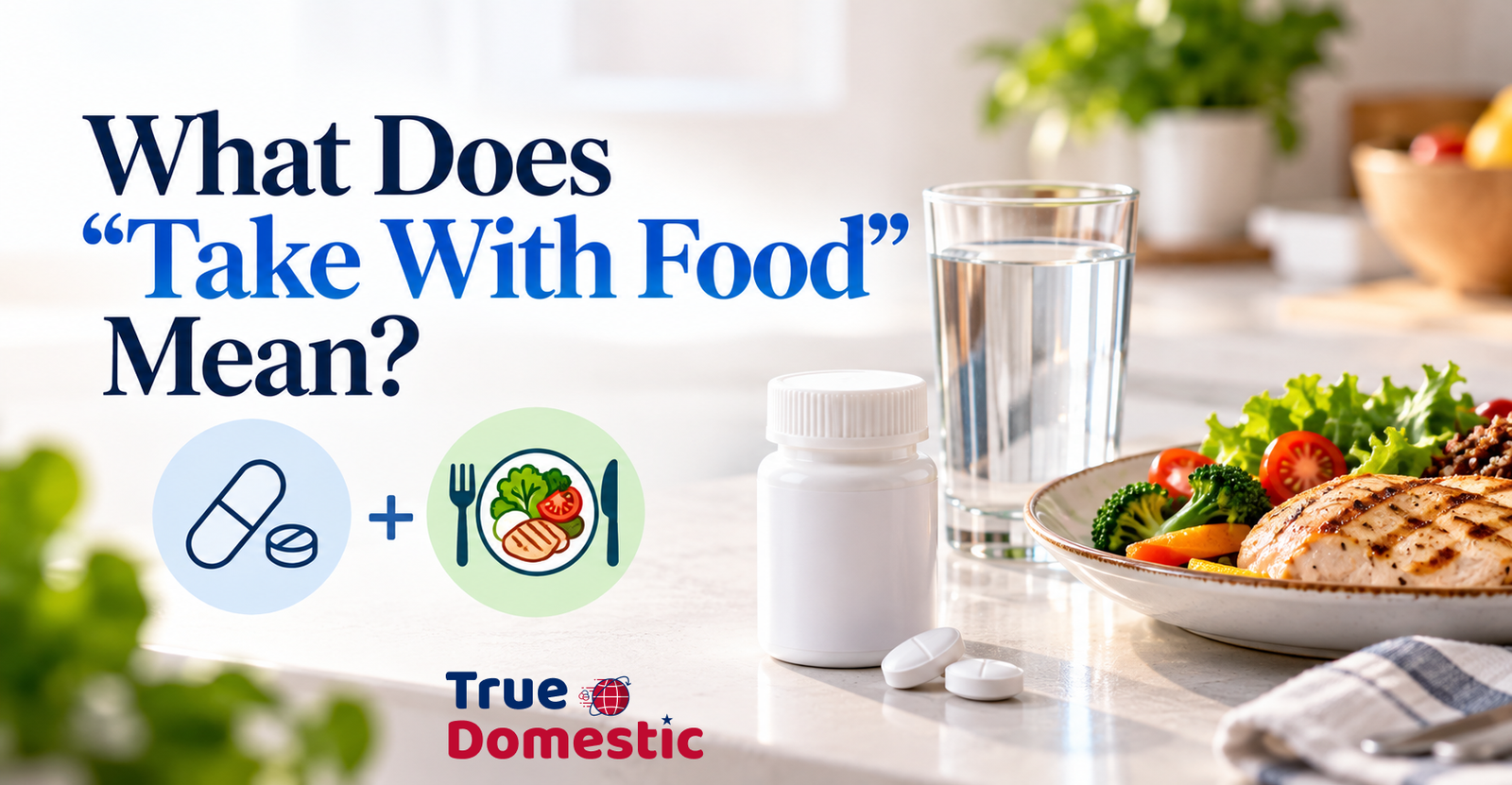
When a medicine label says “take with food,” it means you should take the medicine around the time you eat a meal or snack. This instruction is included because food can affect how some medicines are absorbed, how well they work, and how likely they are to cause stomach irritation.
However, “take with food” does not necessarily mean that you need to take the medicine in the middle of a large meal. The exact instructions can vary depending on the medication.
What Does “Take With Food” Mean?
“Take with food” generally means taking your medicine during or shortly after eating.
For many medicines, a normal meal or snack may be enough. The purpose can be to help reduce stomach irritation or to improve the absorption of the medicine.
If your prescription label or healthcare professional provides specific instructions, follow those instructions rather than relying on general guidance.
Why Do Some Medicines Need to Be Taken With Food?
There are several reasons a medicine may be recommended with food.
1. To Reduce Stomach Irritation
Some medicines can irritate the stomach when taken on an empty stomach.
Taking them with food can provide a protective effect and may reduce symptoms such as:
- Stomach discomfort
- Nausea
- Heartburn
- Indigestion
- Abdominal irritation
Not every medicine that causes stomach upset needs to be taken with food, so always check the specific medication instructions.
2. To Improve Absorption
Food can change how quickly or how much of a medicine enters the bloodstream.
For certain medicines, taking them with food can improve absorption and help the medicine work as intended.
For other medicines, however, food can decrease or delay absorption. This is why medication instructions are important.
3. To Help Prevent Nausea
Some medicines may cause nausea when taken on an empty stomach. Taking them with a meal or snack may make them easier to tolerate.
If a medicine is specifically labeled to be taken with food, following that instruction can help reduce unwanted stomach-related effects.
Does “With Food” Mean Taking Medicine During the Meal?
Not necessarily.
Depending on the medicine, “with food” may mean taking it during a meal or shortly afterward.
Some medicines have more specific instructions, such as:
- Take with a meal
- Take immediately after eating
- Take with or without food
- Take on an empty stomach
- Take 30–60 minutes before eating
These instructions are not interchangeable.
Always check the medicine’s package instructions or ask a pharmacist if you are unsure.
What Counts as Food?
A small snack may be sufficient for some medicines, while others may need to be taken with a proper meal.
Examples of food or snacks can include:
- Bread or toast
- Yogurt
- Fruit
- Cereal
- A sandwich
- Rice or another regular meal
However, the appropriate amount or type of food depends on the medicine.
Some medicines have specific requirements involving fat, calcium, grapefruit, or other foods. Therefore, do not assume that any food will have the same effect.
Can You Take Medicine With Milk?
Sometimes, but not always.
Milk and other dairy products can affect the absorption of certain medicines. Calcium and other components of dairy products can interact with particular medications.
For this reason, you should not automatically use milk as a substitute for water when taking medicine.
Unless your medication instructions say otherwise, water is generally the standard liquid used to swallow tablets and capsules.
What Happens If You Take a Medicine on an Empty Stomach?
The effect depends on the specific medication.
For some medicines, taking them without food may:
- Increase stomach irritation
- Cause nausea
- Change how much medicine is absorbed
- Change how quickly the medicine takes effect
For others, taking them without food may have little or no significant effect.
If you accidentally take a medicine without food when it was supposed to be taken with food, do not automatically take another dose. Check the medication instructions or ask a pharmacist what you should do.
What Does “Take on an Empty Stomach” Mean?
“Take on an empty stomach” is different from “take with food.”
It generally means taking the medicine when there is little food in the stomach, often at a specified period before or after eating.
Some medicines need an empty stomach because food can interfere with their absorption or effectiveness.
If your medicine specifically says to take it on an empty stomach, follow the timing provided on the label or by your healthcare professional.
What Does “Take With or Without Food” Mean?
When a medicine says “take with or without food,” it generally means food does not significantly affect how the medicine works or is absorbed.
You may usually take the medicine either way, but it is still important to follow the prescribed dose and schedule.
If the medicine causes stomach discomfort when taken without food, ask a healthcare professional whether taking it with a meal or snack is appropriate.
Should You Take Every Medicine With Food?
No.
Different medicines have different food-related instructions.
Some medicines should be taken:
- With food
- After food
- On an empty stomach
- With or without food
- At a specific time in relation to meals
Taking every medicine with food without checking the instructions can sometimes reduce its effectiveness or change how it is absorbed.
What If You Forget to Take Your Medicine With Food?
If you realize that you took your medicine without food, do not automatically take another dose.
The appropriate action depends on the medication.
Check the patient information leaflet or contact your pharmacist or healthcare professional for advice.
If you frequently forget medication instructions, using a consistent routine around meals may make it easier to remember.
Can Food Interact With Medicines?
Yes.
Food and beverages can sometimes affect medicines in different ways.
Examples include:
- Certain medicines interacting with grapefruit or grapefruit juice
- Dairy products affecting absorption of some medicines
- High-fat meals changing absorption of certain medications
- Alcohol increasing the effects or risks of some medicines
Because interactions depend on the specific medicine, always check the medication information before changing your diet or taking a new medicine.
Tips for Taking Medicine Correctly
To use medicines safely:
Read the Label
Check whether the medicine should be taken with food, after food, or on an empty stomach.
Use Water Unless Instructed Otherwise
Unless your healthcare professional or medication instructions say otherwise, water is generally the appropriate drink for taking tablets and capsules.
Follow the Prescribed Schedule
Take the medicine at the prescribed dose and frequency.
Ask Before Combining Medicines
Tell your healthcare professional or pharmacist about other prescription medicines, over-the-counter products, vitamins, and supplements you take.
Don’t Change Instructions Yourself
Do not change the timing, dose, or method of taking a medicine simply because it seems more convenient.
Frequently Asked Questions
Does “take with food” mean during the meal?
Usually, it means taking the medicine during or around a meal or snack. However, the exact timing can depend on the medication.
Can I take medicine with a snack instead of a meal?
For some medicines, a snack may be sufficient. For others, a full meal or a specific type of food may be required. Check the medication instructions.
Can I take medicine immediately after eating?
For many medicines labeled “take with food,” taking them shortly after eating may be appropriate. However, follow the specific instructions for your medicine.
Can I take medicine with coffee?
Not always. Coffee and other caffeinated beverages can interact with certain medicines or affect their absorption. Water is generally the safest default unless your medication instructions specify otherwise.
What if I cannot eat before taking my medicine?
Do not guess about whether it is safe to take the medicine without food. Check the medication instructions or speak with a pharmacist or healthcare professional.
Is taking medicine with food always safer?
No. Some medicines need to be taken on an empty stomach because food can interfere with their absorption or effect. Always follow the instructions specific to your medication.
Final Thoughts
“Take with food” is an important medication instruction, but it does not mean exactly the same thing for every medicine. Food can affect how a medicine is absorbed, how well it works, and how it affects the stomach.
Some medicines should be taken with a meal or snack, while others need to be taken on an empty stomach or at a specific time relative to meals.
The safest approach is to follow the instructions provided with your medicine and ask your doctor or pharmacist if you are unsure. Never change the way you take a prescription medicine simply based on general advice.
Medical Disclaimer: This article is intended for general educational purposes only and does not replace professional medical advice, diagnosis, or treatment. Always follow the instructions provided with your specific medication and consult a qualified healthcare professional or pharmacist if you have questions.