


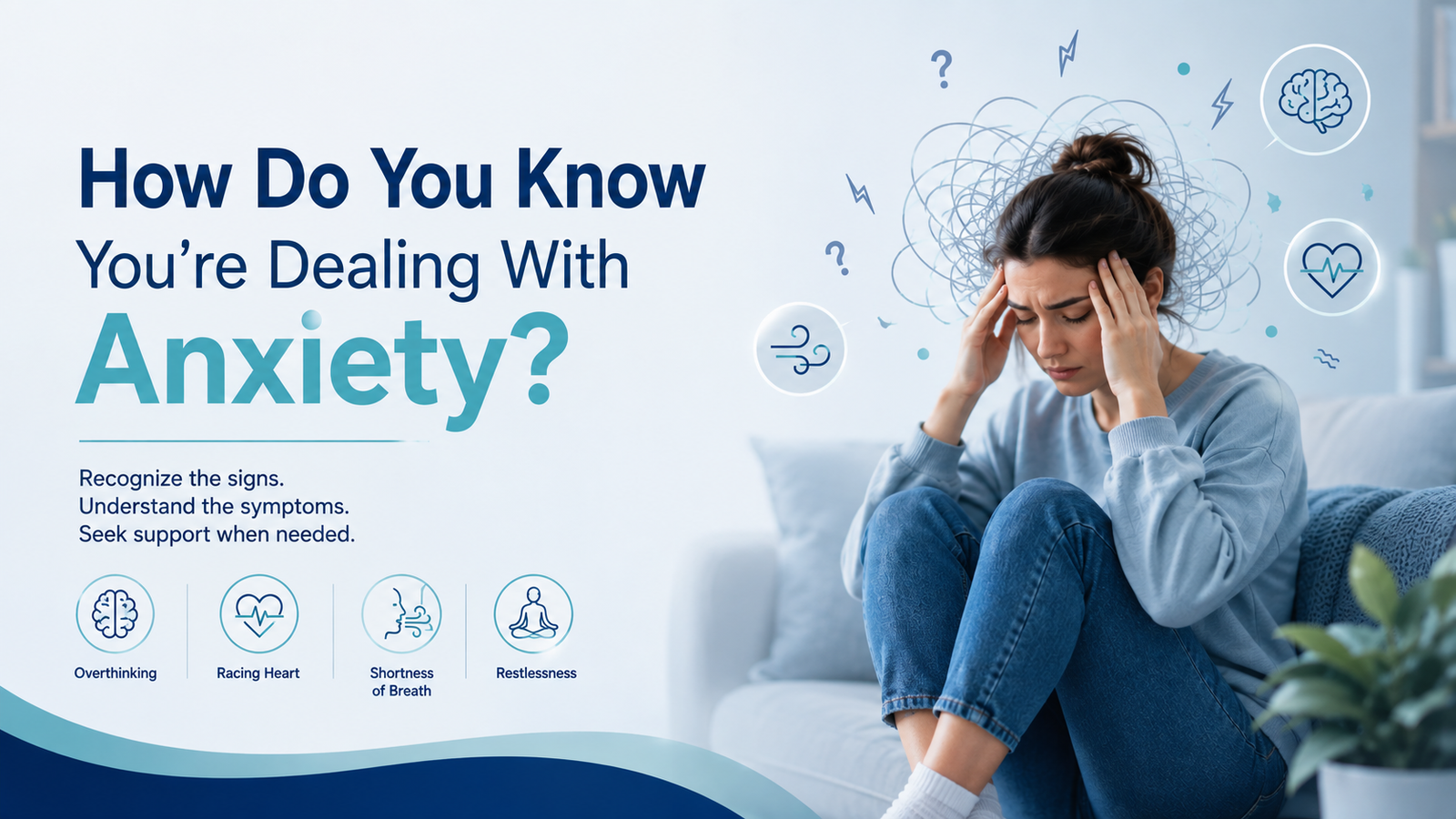
How Do You Know If You’re Dealing With Anxiety?
Anxiety is a natural response to stress. Everyone experiences feelings of worry or nervousness from time to time, especially before important events such as an exam, job interview, or major life change. However, when these feelings become persistent, overwhelming, or begin interfering with your daily life, they may be signs of an anxiety disorder.
Recognizing the early signs of anxiety can help you seek the right support and improve your overall well-being.
Common Signs and Symptoms of Anxiety
Although anxiety affects everyone differently, some of the most common symptoms include:
Excessive Worry
You find yourself constantly worrying about everyday situations, even when there is little or no reason for concern. The worry may feel difficult to control and often lasts for weeks or months.
Feeling Restless or On Edge
Many people with anxiety describe feeling tense, unable to relax, or constantly “on edge,” even during calm situations.
Racing Thoughts
Your mind may jump from one worry to another, making it difficult to focus on work, conversations, or daily tasks.
Trouble Sleeping
Difficulty falling asleep, waking frequently during the night, or feeling tired despite getting enough hours of sleep can all be associated with anxiety.
Physical Symptoms
Anxiety doesn’t only affect your thoughts. it can also cause physical symptoms, such as:
- Rapid heartbeat
- Sweating
- Trembling or shaking
- Shortness of breath
- Muscle tension
- Dizziness
- Upset stomach or nausea
- Headaches
Difficulty Concentrating
Persistent worry can make it hard to pay attention, remember information, or complete routine activities.
Irritability
Feeling easily frustrated or becoming irritated over minor issues may be another sign of ongoing anxiety.
Avoiding Certain Situations
You may begin avoiding social events, public places, work responsibilities, or activities that trigger feelings of fear or worry.
When Is Anxiety More Than Everyday Stress?
Occasional stress is a normal part of life. Anxiety may require professional attention when:
- Symptoms last for several weeks or longer.
- Worry feels excessive or difficult to control.
- Anxiety interferes with work, school, relationships, or daily activities.
- Physical symptoms become frequent or severe.
- You begin avoiding situations because of fear or anxiety.
Common Causes and Risk Factors
Several factors can contribute to anxiety, including:
- Ongoing work or financial stress
- Major life changes
- Family history of anxiety disorders
- Traumatic experiences
- Chronic medical conditions
- Poor sleep habits
- Excessive caffeine or stimulant use
Often, anxiety develops from a combination of biological, psychological, and environmental factors.
Healthy Ways to Manage Anxiety
Many people benefit from lifestyle changes that support mental well-being, including:
- Maintaining a regular sleep schedule
- Exercising most days of the week
- Practicing deep breathing or mindfulness techniques
- Limiting caffeine and alcohol
- Eating a balanced diet
- Staying connected with supportive friends and family
- Seeking professional counseling or therapy when needed
When Should You Seek Medical Help?
Consider speaking with a healthcare professional if anxiety is:
- Affecting your daily life or relationships.
- Becoming more frequent or intense.
- Causing panic attacks.
- Preventing you from sleeping or working normally.
- Accompanied by feelings of hopelessness or thoughts of self-harm.
A qualified healthcare provider can evaluate your symptoms and recommend appropriate treatment, which may include therapy, lifestyle modifications, or medication when clinically appropriate.
Final Thoughts
Anxiety is one of the most common mental health conditions, and it is treatable. Understanding the signs early can help you take positive steps toward improving your mental health. If persistent worry, physical symptoms, or emotional distress are interfering with your life, don’t hesitate to seek professional guidance. Early support can make a meaningful difference in managing anxiety and improving your quality of life.
Disclaimer: This article is intended for educational purposes only and should not be considered medical advice, diagnosis, or treatment. Always consult a qualified healthcare professional regarding any concerns about your mental or physical health.