


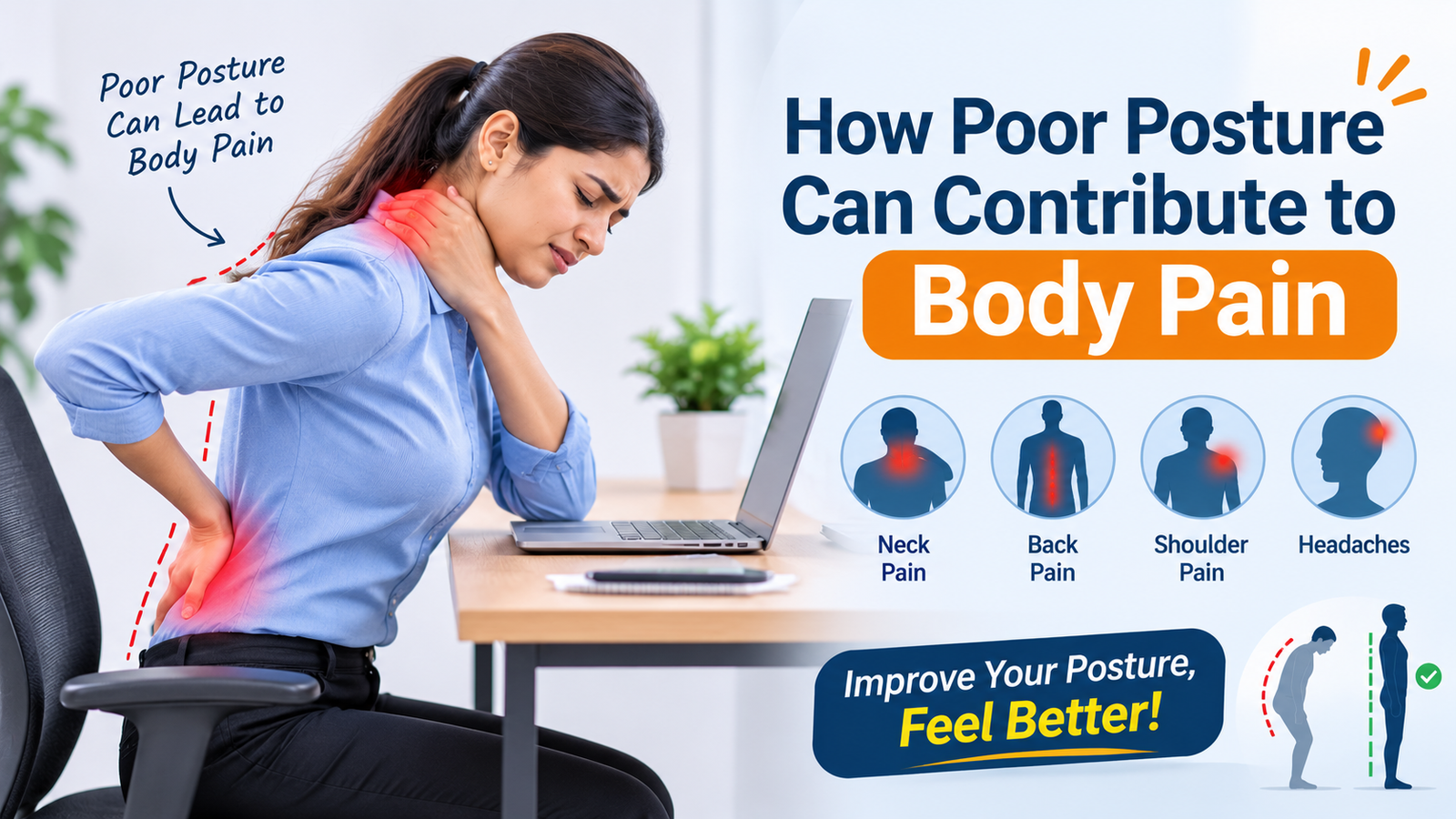
How Poor Posture Can Contribute to Body Pain
How Poor Posture Can Contribute to Body Pain
Maintaining good posture is an important part of protecting your overall physical health. Whether you are sitting at a desk, standing, walking, or using a mobile phone, the way you position your body can affect your muscles, joints, and spine.
Many people spend long hours sitting, working on computers, looking down at mobile screens, or maintaining uncomfortable positions throughout the day. Over time, these habits may contribute to muscle tension, joint discomfort, back pain, and neck stiffness.
Although occasional discomfort may seem harmless, consistently maintaining poor posture can place unnecessary stress on different parts of the body. Understanding the relationship between posture and body pain can help you develop healthier daily habits and reduce the risk of posture-related discomfort.
What Is Poor Posture?
Poor posture occurs when your body is positioned in a way that places unnecessary strain on muscles, ligaments, joints, and the spine.
A healthy posture generally allows your body weight to be distributed more evenly, reducing excessive pressure on specific areas.
Common examples of poor posture include:
- Slouching while sitting or standing.
- Bending your neck forward while using a mobile phone.
- Sitting with your shoulders rounded.
- Leaning forward toward a computer screen.
- Standing with most of your body weight on one leg.
- Sitting for extended periods without changing positions.
These habits may gradually affect the body’s natural alignment and contribute to physical discomfort.
How Poor Posture Causes Body Pain
Poor posture can influence different areas of the body by placing additional pressure on muscles and joints.
1. Neck Pain and Stiffness
Looking down at mobile phones or leaning toward computer screens for extended periods can increase strain on the neck muscles.
This position may contribute to neck stiffness, muscle tightness, headaches, and discomfort when turning your head.
Maintaining a neutral head position and keeping screens closer to eye level can help reduce unnecessary neck strain.
2. Back Pain
Slouching while sitting or standing can place additional stress on the muscles and structures supporting your spine.
Poor sitting habits, especially during long working hours, may contribute to upper and lower back discomfort.
Using proper lumbar support and maintaining a comfortable sitting position may help reduce strain.
3. Shoulder Pain
Rounded shoulders and prolonged forward-leaning positions can increase tension around the shoulders and upper back.
People who frequently work on computers or use mobile devices may experience shoulder tightness, stiffness, and discomfort.
Regular movement and gentle stretching can help improve shoulder mobility.
4. Hip and Lower Body Discomfort
Sitting for extended periods may contribute to tightness in the hip muscles and reduced flexibility.
Poor standing habits or uneven weight distribution may also place additional stress on the hips, knees, and lower body.
Taking movement breaks and maintaining an active lifestyle can help support better mobility.
5. Headaches and Muscle Tension
Poor neck and upper-back positioning may contribute to muscle tension that is sometimes associated with tension-type headaches.
Improving workstation ergonomics and avoiding prolonged neck bending may help reduce some posture-related discomfort.
Common Daily Habits That Can Affect Your Posture
Several everyday activities can gradually contribute to poor posture.
1. Sitting for Long Hours
Working at a desk or sitting continuously without movement can encourage slouching and muscle stiffness.
2. Excessive Mobile Phone Use
Looking down at a phone for extended periods may increase strain on the neck and upper back.
3. Incorrect Workstation Setup
A computer screen positioned too low, an uncomfortable chair, or an improperly placed keyboard may encourage unnatural body positions.
4. Lack of Physical Activity
Insufficient movement and limited muscle conditioning may affect the strength and flexibility needed to maintain comfortable posture.
5. Improper Sleeping Positions
An unsuitable pillow or uncomfortable sleeping position may contribute to neck and back discomfort.
Signs That Your Posture May Be Affecting Your Body
Poor posture does not always cause immediate symptoms. However, certain signs may indicate that your daily positioning habits are contributing to discomfort.
Watch for the following:
- Frequent neck or shoulder stiffness.
- Recurring upper or lower back pain.
- Muscle tightness after sitting for long periods.
- Discomfort when standing or walking.
- Frequent headaches associated with neck tension.
- Reduced flexibility or difficulty maintaining comfortable positions.
- Feeling physically uncomfortable after working at a desk.
If these symptoms continue, become severe, or interfere with everyday activities, consult a qualified healthcare professional for evaluation.
Tips to Improve Your Posture and Reduce Body Discomfort
Developing healthier posture habits does not require major lifestyle changes. Small adjustments throughout the day can make a difference.
1. Maintain a Comfortable Sitting Position
Keep your feet flat on the floor, your back supported, and your shoulders relaxed. Adjust your chair so that your knees and hips are positioned comfortably.
2. Position Your Screen at Eye Level
Keep your computer screen at a comfortable height to avoid repeatedly bending your neck forward.
When using a mobile phone, try to raise it closer to eye level instead of constantly looking down.
3. Take Regular Movement Breaks
Avoid remaining in the same position for extended periods. Stand up, walk around, and gently move your shoulders and neck throughout the day.
4. Exercise Regularly
Activities such as walking, swimming, yoga, and appropriate strength exercises may help improve flexibility, muscle strength, and physical function.
5. Stretch Tight Muscles
Gentle stretching can help relieve muscle tightness and improve mobility. Choose exercises appropriate for your physical condition and avoid movements that increase pain.
6. Choose Appropriate Sleeping Support
Use a comfortable mattress and pillow that support a natural sleeping position. Your neck and spine should remain comfortably aligned while sleeping.
7. Pay Attention to Your Standing Posture
Distribute your body weight evenly across both feet. Keep your shoulders relaxed and avoid locking your knees while standing.
When Should You Seek Medical Help?
Although posture-related discomfort may improve with simple adjustments, persistent pain should not be ignored.
Consult a healthcare professional if:
- Neck or back pain continues despite changing your posture.
- Pain becomes progressively worse.
- You experience numbness, tingling, or weakness in your arms or legs.
- Pain interferes with sleep, work, or daily activities.
- You experience recurring headaches along with neck discomfort.
- You develop sudden or severe back pain.
Seek urgent medical attention if back pain is accompanied by new bladder or bowel control problems, numbness around the groin or buttocks, or significant leg weakness.