
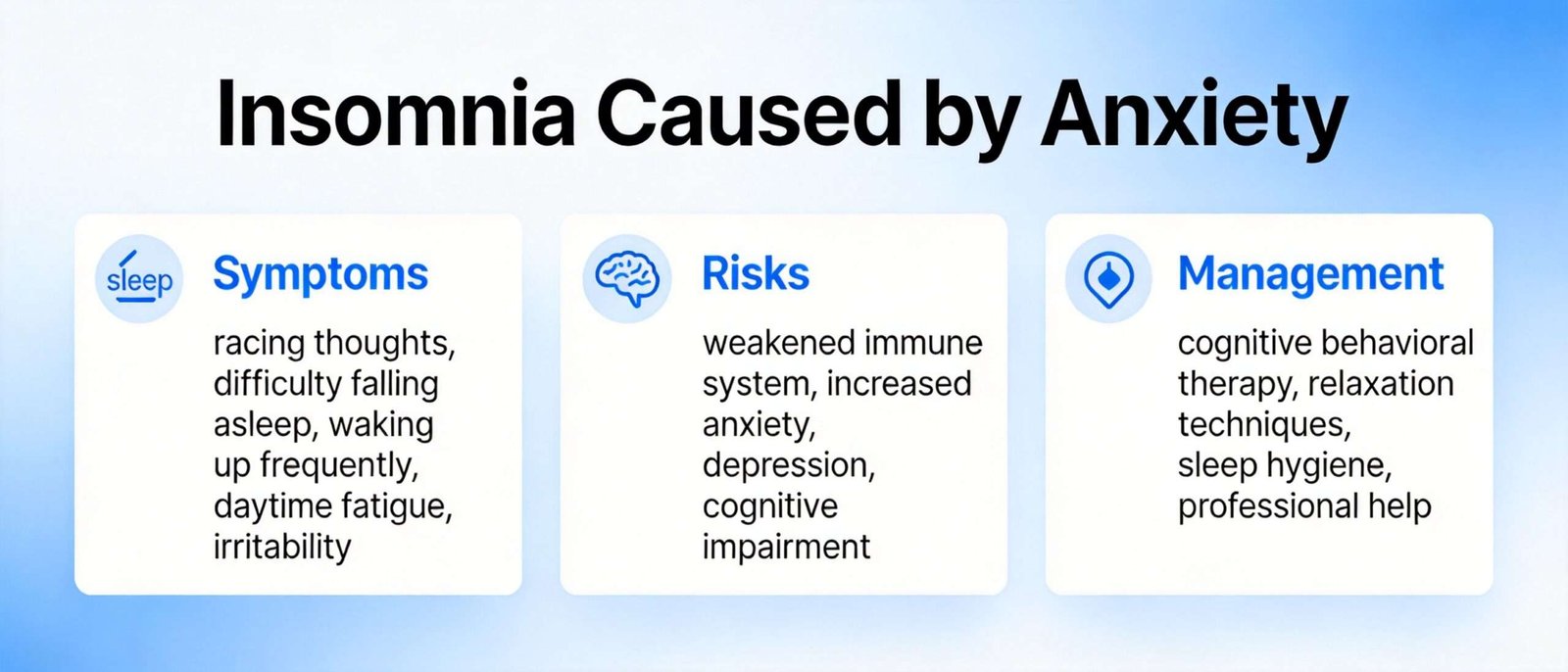
Insomnia Caused by Anxiety: Symptoms, Risks, and Management
Insomnia is one of the most common sleep disorders linked to anxiety. People with anxiety-related insomnia often struggle to fall asleep, stay asleep, or feel rested after sleep. This condition can significantly affect daily life and emotional well-being.
Anxiety keeps the brain active even at night. Persistent worrying, fear of the next day, or stress about sleep itself can prevent the mind from entering a relaxed state needed for restful sleep.
Symptoms of Anxiety-Related Insomnia
Common signs include:
Taking a long time to fall asleep
Waking up multiple times during the night
Feeling tired despite spending enough time in bed
Increased anxiety during nighttime
If left untreated, insomnia can worsen anxiety symptoms and reduce overall quality of life.
Managing Insomnia Linked to Anxiety
Managing anxiety-related insomnia often involves a combination of approaches:
Maintaining a consistent sleep schedule
Reducing caffeine and screen exposure before bedtime
Practicing relaxation techniques such as deep breathing
Seeking professional guidance when sleep problems persist
Early management of insomnia can prevent long-term sleep disruption and help stabilize anxiety levels.
For a deeper understanding of how anxiety and sleep are connected, refer to our detailed Anxiety & Sleep Issues pillar guide