
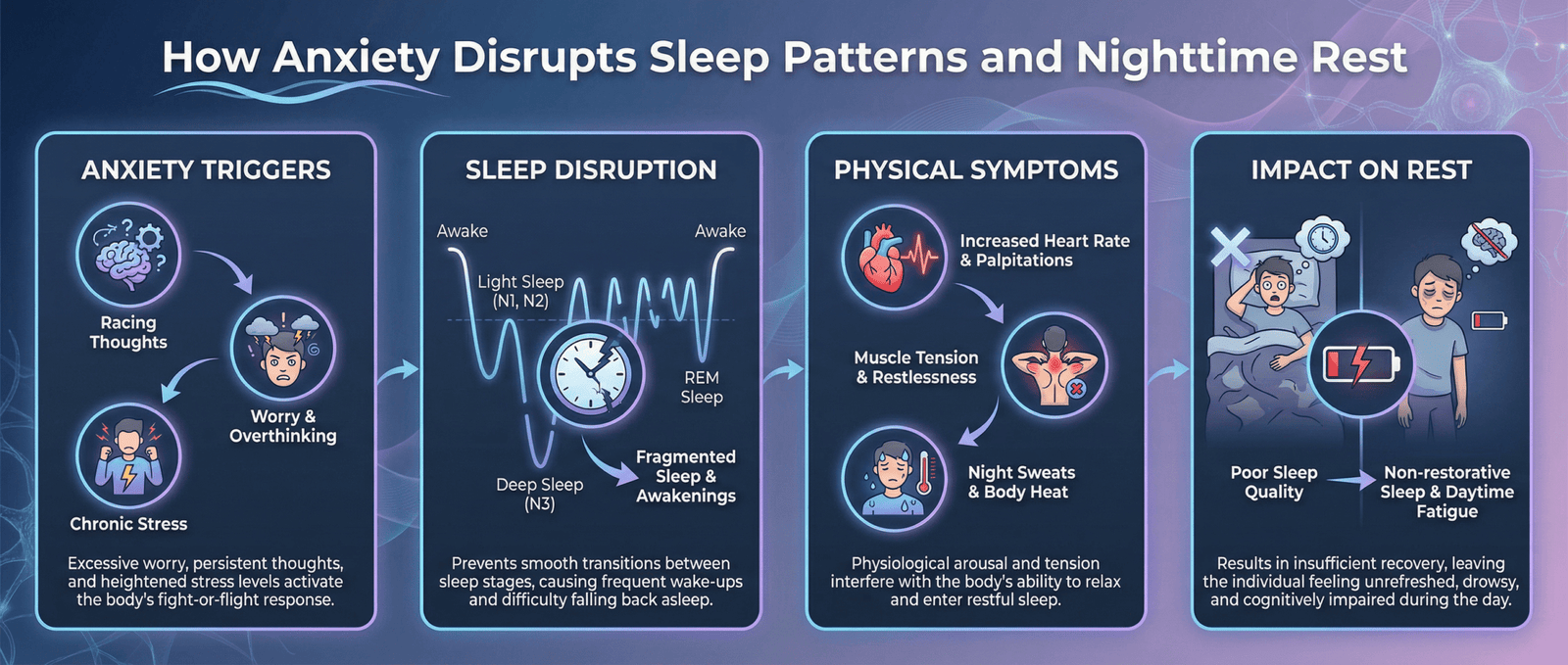
How Anxiety Disrupts Sleep Patterns and Nighttime Rest
Anxiety has a strong impact on how well a person sleeps. When the mind is filled with worry or fear, the body remains in a state of alertness, making it difficult to relax at night. This is why many people with anxiety experience trouble falling asleep or staying asleep.
During anxiety, stress hormones such as cortisol remain elevated. These hormones signal the brain to stay awake and alert, even when the body is tired. As a result, sleep patterns become irregular and fragmented.
Common Sleep Problems Caused by Anxiety
People with anxiety may experience:
Difficulty falling asleep due to racing thoughts
Frequent awakenings during the night
Light or restless sleep
Early morning waking with anxiety
Over time, these issues can reduce sleep quality and increase daytime fatigue, irritability, and poor focus.
The Vicious Cycle of Anxiety and Poor Sleep
Lack of sleep makes the brain more sensitive to stress. This means that poor sleep can increase anxiety the following day, which then leads to even worse sleep at night. Without intervention, this cycle can continue for weeks or months.
Improving sleep habits, managing stress levels, and seeking appropriate treatment can help restore healthy sleep patterns and reduce anxiety-related sleep disturbances.