
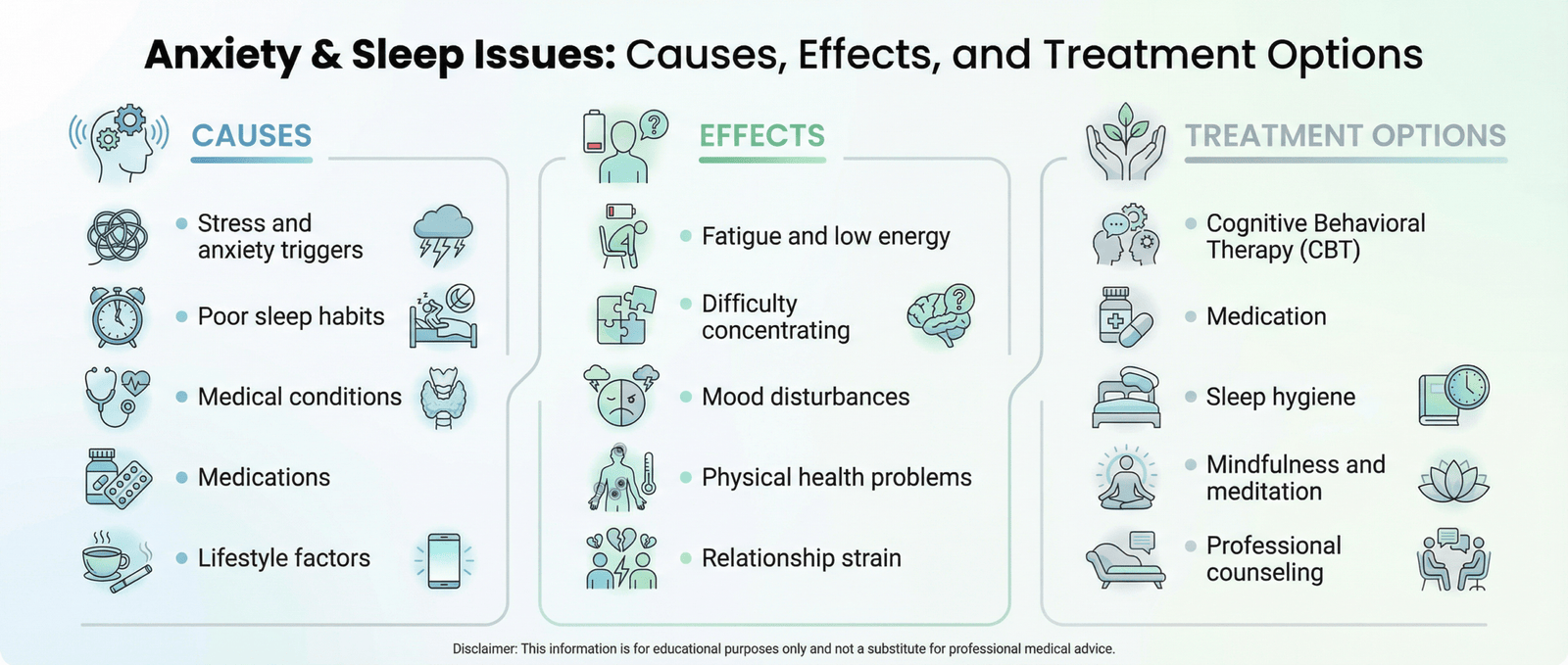
Anxiety & Sleep Issues: Causes, Effects, and Treatment Options
Anxiety and sleep problems are closely connected. Many people who struggle with anxiety also find it hard to fall asleep, stay asleep, or wake up feeling rested. Poor sleep can then increase anxiety, creating a cycle that is difficult to break.
This guide explains how anxiety affects sleep, common symptoms, and the available treatment options to help manage both conditions effectively.
Understanding the Connection Between Anxiety and Sleep
Anxiety keeps the brain in a constant state of alertness. When the mind is overactive, it becomes difficult to relax enough to sleep.
People with anxiety often experience:
Racing thoughts at bedtime
Excessive worry about the future
Fear of not getting enough sleep
Physical tension and restlessness
Sleep, on the other hand, is essential for emotional balance. When sleep is disrupted, the brain becomes more sensitive to stress, which increases anxiety levels.Many people seek medical support through Anxiety Medications and professional Sleep Disorder treatments when lifestyle changes alone are not enough.
How Anxiety Affects Sleep Quality
Anxiety impacts sleep in several ways:
1. Difficulty Falling Asleep
Worrying thoughts make it hard to calm the mind, leading to long hours spent awake in bed.
2. Frequent Night Awakenings
People with anxiety may wake up multiple times during the night with a sense of fear or restlessness.
3. Early Morning Awakening
Anxiety can cause people to wake up earlier than desired and be unable to return to sleep.
4. Poor Sleep Quality
Even after sleeping for several hours, the sleep may not feel refreshing.
Anxiety can significantly disrupt normal sleep patterns, as explained in our guide on how anxiety disrupts sleep patterns.
Common Sleep Disorders Linked to Anxiety
Anxiety is commonly associated with the following sleep disorders:
Insomnia – Trouble falling or staying asleep
Restless sleep – Constant movement or discomfort during sleep
Nightmares – Anxiety-related dreams that disturb rest
Sleep anxiety – Fear or stress specifically related to sleeping
If left untreated, these issues can affect daily performance, mood, and overall health.
Short-term insomnia is often managed with medications such as Zopiclone or Eszopiclone, under medical supervision.
Symptoms of Anxiety and Sleep Problems
Common signs include:
Constant fatigue
Irritability or mood swings
Poor concentration
Headaches or body pain
Increased heart rate
Feeling anxious at night
For anxiety-related sleep disturbances, doctors may prescribe medications such as XANAX 2Mg (FarmaPram) or XANAX 1mg (Ksalol Brand) to help calm the mind and reduce nighttime anxiety under proper medical guidance.
Recognizing these symptoms early can help in seeking the right support.
Treatment Options for Anxiety and Sleep Issues
Managing anxiety and sleep problems often requires a combination of approaches.
1. Lifestyle and Behavioral Changes
Simple habits can make a big difference:
Maintain a regular sleep schedule
Avoid caffeine late in the day
Reduce screen time before bed
Practice relaxation techniques like deep breathing
2. Therapy and Stress Management
Cognitive Behavioral Therapy (CBT) is widely used to treat anxiety and insomnia by changing negative thought patterns related to sleep.
3. Medications
In some cases, doctors may prescribe medications to help manage anxiety or improve sleep quality. These are typically used for short-term or supervised treatment.
For anxiety-related sleep disturbances, doctors may prescribe medications such as XANAX 2Mg (FarmaPram) or XANAX 1mg (Ksalol Brand) to help calm the mind and reduce nighttime anxiety under proper medical guidance.
Always consult a healthcare professional before using any medication for anxiety or sleep disorders.
Breaking the Anxiety–Sleep Cycle
Improving sleep can significantly reduce anxiety, and managing anxiety can improve sleep. Consistency is key. Small improvements in daily habits, combined with proper treatment, can lead to long-term relief.
In cases where lifestyle changes and relaxation techniques are not enough, doctors may recommend short-term medication support for insomnia. These treatments are generally prescribed under medical supervision to improve sleep onset and duration.
Medications such as Belbain (Zolpidem) 10mg are commonly used to help individuals fall asleep faster, while Zunestar 3mg may be prescribed to support longer and more stable sleep throughout the night.
These medications should always be used as directed by a healthcare professional to minimize side effects and dependence risks.
When to Seek Medical Help
You should consider professional help if:
Sleep problems last longer than 2–3 weeks
Anxiety interferes with daily activities
You feel constantly exhausted or overwhelmed
Early intervention can prevent the condition from worsening.
Frequently Asked Questions (FAQs)
Can anxiety really cause sleep problems?
Yes. Anxiety activates stress hormones that make it difficult for the body and mind to relax, directly affecting sleep.
Can lack of sleep increase anxiety?
Absolutely. Poor sleep increases emotional sensitivity and stress levels, worsening anxiety symptoms.
Are anxiety and insomnia treatable?
Yes. With the right combination of lifestyle changes, therapy, and medical guidance, both conditions can be effectively managed.
Final Thoughts :-
Anxiety and sleep issues are deeply connected, but they are also manageable. Understanding the relationship between the two is the first step toward better mental health and restful sleep. With proper care and consistent effort, it is possible to regain control and improve overall well-being.